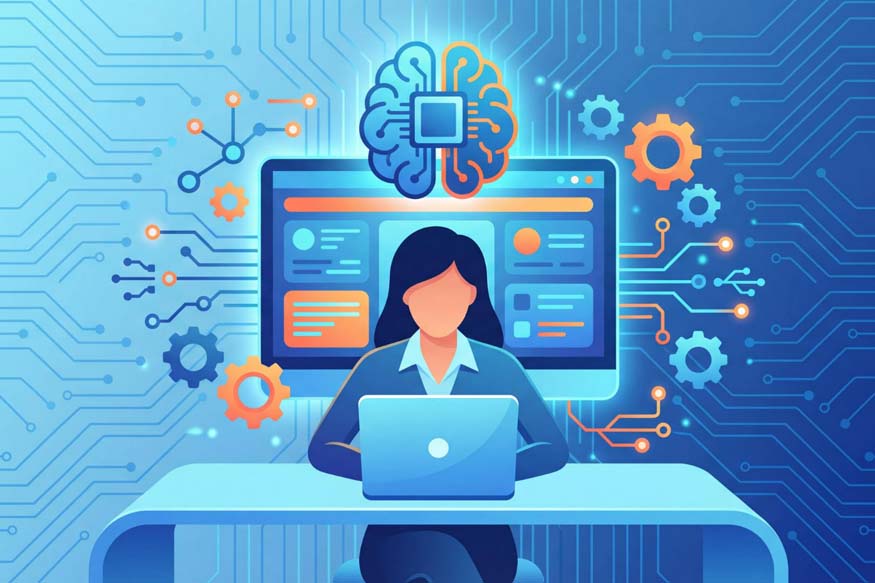
Let’s look at it this way: the world our kids are growing up in isn’t just about reading from a textbook anymore. It’s about understanding the brain behind the smartphone and the logic inside their favourite games. This is exactly why AI in CBSE schools has become such a hot topic lately. It isn’t just a fancy buzzword it is a fundamental shift in how we teach children to approach challenges. For those looking for a CBSE schools in Nagpur, this blog will describe how it operates and benefit students.
When we talk about computational thinking for kids, we aren’t suggesting that every eight-year-old needs to become a software engineer overnight. Instead, it’s about giving them a mental toolkit. Whether they grow up to be artists, doctors or entrepreneurs the ability to break down a complex problem into bite-sized, manageable pieces is a superpower. For parents currently looking into School admission in Nagpur, seeing how a campus integrates these modern skills is becoming just as important as checking out the sports facilities or the library.
You might notice that children are naturally curious about how things work. Computational thinking taps into that curiosity. It’s a step-based method of solving problems. Think of it like following a recipe, you first need the right ingredients, a specific order of steps and the ability to fix things if the cake doesn’t rise. For students in Classes 3-8 this is taught through puzzles and logic games. It’s the pre-work that makes coding much more effective later on. By learning to spot patterns and remove unnecessary details kids build a logical foundation that stays with them forever.
Why Early Exposure to AI is a Game Changer
Most kids use Artificial Intelligence every single day without realizing it. From YouTube recommendations to voice assistants, AI is everywhere. By introducing an AI curriculum schools help demystify this technology.
- Relatable Learning: Lessons use everyday examples, like how a phone recognizes a face.
- Building Confidence: When technology isn’t magic, kids feel empowered to create with it, not just consume it.
- Logic over Rote: It moves away from memorizing facts and toward understanding “why” and “how”.
If you are scouting for the Best School in Nagpur, you’ll likely find that the top institutions are already making these concepts a core part of the classroom experience. This early start ensures that students don’t just see technology as a consumer tool, but as something they can manipulate and improve. This is a core pillar of future tech education schools, where the focus is on long-term understanding rather than short-term grades.
Bridging the Gap: Coding and Logic
Coding is often seen as the language of the future, but it’s really just the tool we use to apply computational thinking. When schools introduce coding for students in India, they usually start with visual blocks. It’s fun, colourful and feels like playing with digital Legos. This hands-on approach is what defines modern education. It isn’t about sitting in a dark room typing lines of green text but about collaboration, trial and error and the feeling of success when a program finally does what you want it to do.
A fundamental lesson for any student is the realization that computers lack independent thought it only does exactly what you tell it to do. If the code doesn’t work, it’s usually because the instruction was unclear. This teaches persistence. When a child fixes a bug in their code, they are not just fixing a script they are also refining their own logic. This is why computational thinking for children is very vital. It is a form of mental exercise that strengthens the brain’s logic muscle.
The Four Pillars of Thinking Like a Pro
To keep things simple, we can break down how AI in CBSE schools is actually taught by looking at four easy steps that teachers use in the classroom:
- Decomposition: Breaking a big scary problem into smaller easier parts. Think of it like cleaning a messy room. First, you start with the toys, then the books, then the clothes.
- Pattern Recognition: Looking for similarities between problems. If you know how to solve a puzzle with 10 pieces you can use those same strategies for a 100-piece one.
- Abstraction: Focusing only on the important information and ignoring the fluff.
- Algorithmic Design: Creating a step-by-step list of instructions to solve the issue.
Practical Classroom Examples
Imagine a Class 4 student trying to explain how to make a peanut butter sandwich to a robot. If they forget to say open the jar, the robot fails. That’s a lesson in precision. Later, in the AI curriculum for CBSE, that same student might look at how a streaming app suggests a new cartoon. They start to see that the app isn’t reading their mind it is just looking at patterns in what they watched before.
This kind of practical exposure is what parents look for when seeking CBSE School admission in Nagpur. They want to know that their child is getting a 21-century education that goes beyond the chalkboard. Many CBSE schools in Nagpur are now creating dedicated Innovation Labs where these experiments happen daily.
Finding the Right Fit in Nagpur
Choosing a school is a massive decision. If you’re looking at CBSE schools in Nagpur, you’ll notice that many are now situated along major hubs to make commuting easier. For instance, finding a quality CBSE School in Amravati Road means your child can access high-tech labs without spending hours on a bus.
When you begin the process of looking for School admission in Nagpur, don’t be afraid to ask how they handle tech. Are the kids just using computers or are they learning to understand them? The Best School in Nagpur will be the one that balances these digital skills with strong values, sports and traditional academics. It’s about the “Whole Child”, not just the “Digital Child”.
Frequently Asked Questions
What is computational thinking for kids?
It is a simple way of solving problems step by step by breaking them into smaller parts. It’s like a mental workout that helps kids think more clearly and logically in all subjects not just math or science.
Why is AI in CBSE schools introduced so early?
Introducing it early helps demystify technology. When kids understand that AI is just a tool based on data and patterns, they become more confident and responsible users of technology rather than just passive consumers.
How is coding for students in India taught?
It’s taught through games, visuals and simple interactive activities. We use block-based coding for younger years so they can focus on the logic without worrying about complicated typing or syntax.
What do students learn in the AI curriculum CBSE?
The curriculum covers basic concepts like pattern recognition, data collection and how machines use “if-then” logic to make decisions. It’s very hands-on and uses real-world examples.
How do future tech education schools help students?
These schools focus on learning how to learn. By teaching logical thinking and creativity, they prepare students for jobs that haven’t even been created yet in the tech industry.
Does my child need a background in math to learn AI?
Not at all. At the Class 3-8 level, the focus is on logic and creativity. The math behind the algorithms comes much later, for now it is all about the logic of the machine.
The Long-Term Impact
Education used to be about filling a bucket with facts. Today, it’s about lighting a fire of curiosity. By teaching computational thinking for kids, we are giving them the matchstick.
The kids who understand these systems today will be the ones designing the ethical AI of tomorrow. They will be the ones using data to solve climate change or improve healthcare. It all starts with a simple logic puzzle in a Class 3 classroom. When you look at CBSE Schools in Amravati Road or anywhere else in the city look for that spark of innovation. That is where the real learning happens.
Choosing the right CBSE school in Nagpur isn’t just about the next academic year but about the next decade. By prioritizing future tech education schools, you are ensuring your child is ready for whatever the digital world throws at them. Whether they become programmers or poets, that logical foundation will serve them for a lifetime.
Why Centre Point School is Leading the Way
At Centre Point School, we believe that every child deserves a head start in the digital age. As a premier CBSE school in Nagpur, we don’t just teach technology we weave it into the fabric of our curriculum. Whether it’s through interactive labs or creative problem-solving sessions, our students learn to be innovators. We understand that the jump from Class 3 to Class 8 is a massive period of growth and our curriculum is designed to grow with them.
We are proud to be recognized among the Best CBSE Schools in the region. With campuses serving as top-tier CBSE Schools in Amravati Road, we ensure that world-class education is accessible. Our mission is to foster an environment where technology isn’t just an extra class, but a way to sharpen young minds for the challenges of tomorrow. Parents searching for a CBSE school in Nagpur or planning CBSE School admission in Nagpur can explore our simple and structured admission process. Contact us for CBSE Admission to know more about how we prepare students for the future.